
Building Propulsion Systems for the Modern Aerospace Industry
We design the hardware and software that enables microturbine engines to stay at the forefront of unmanned platform propulsion.
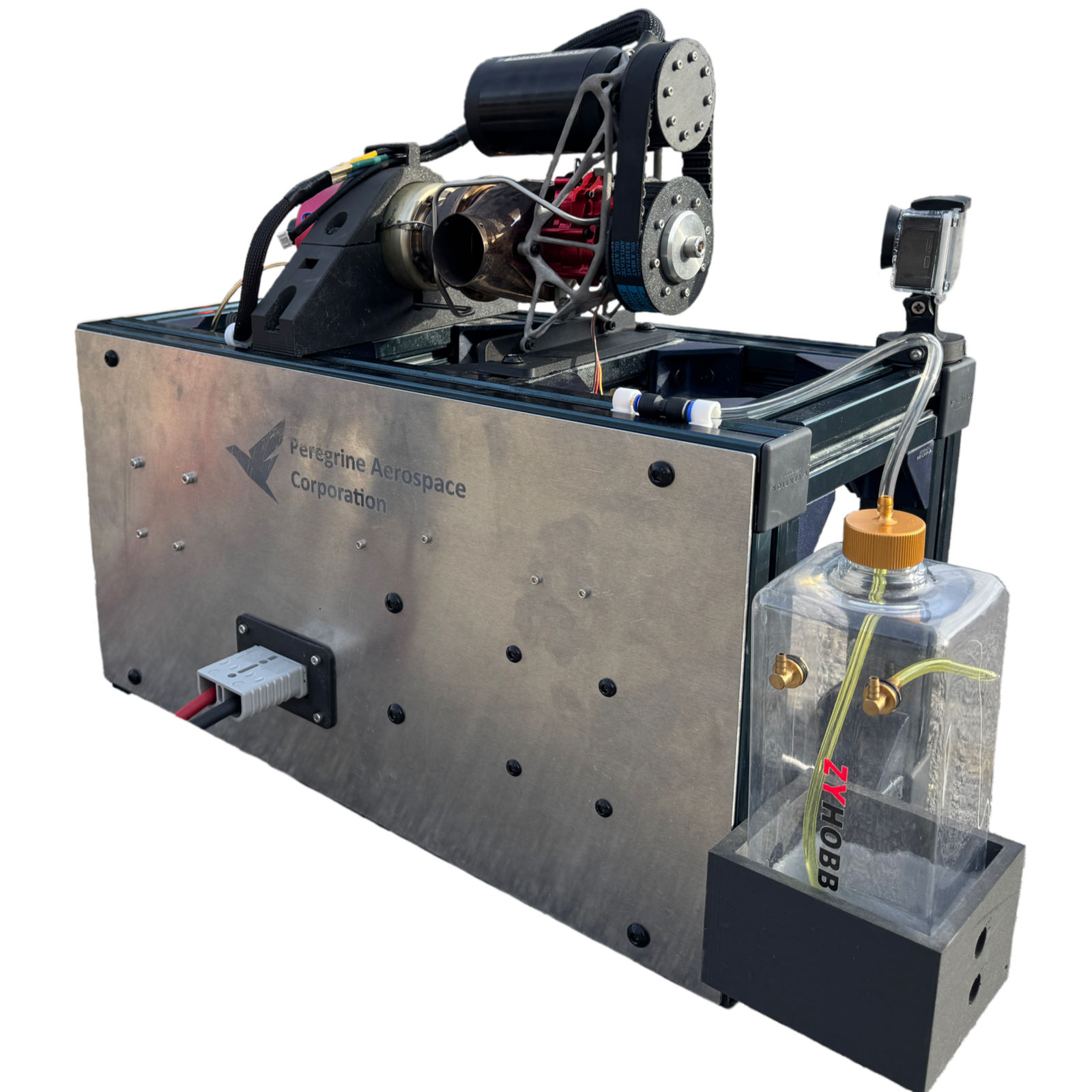
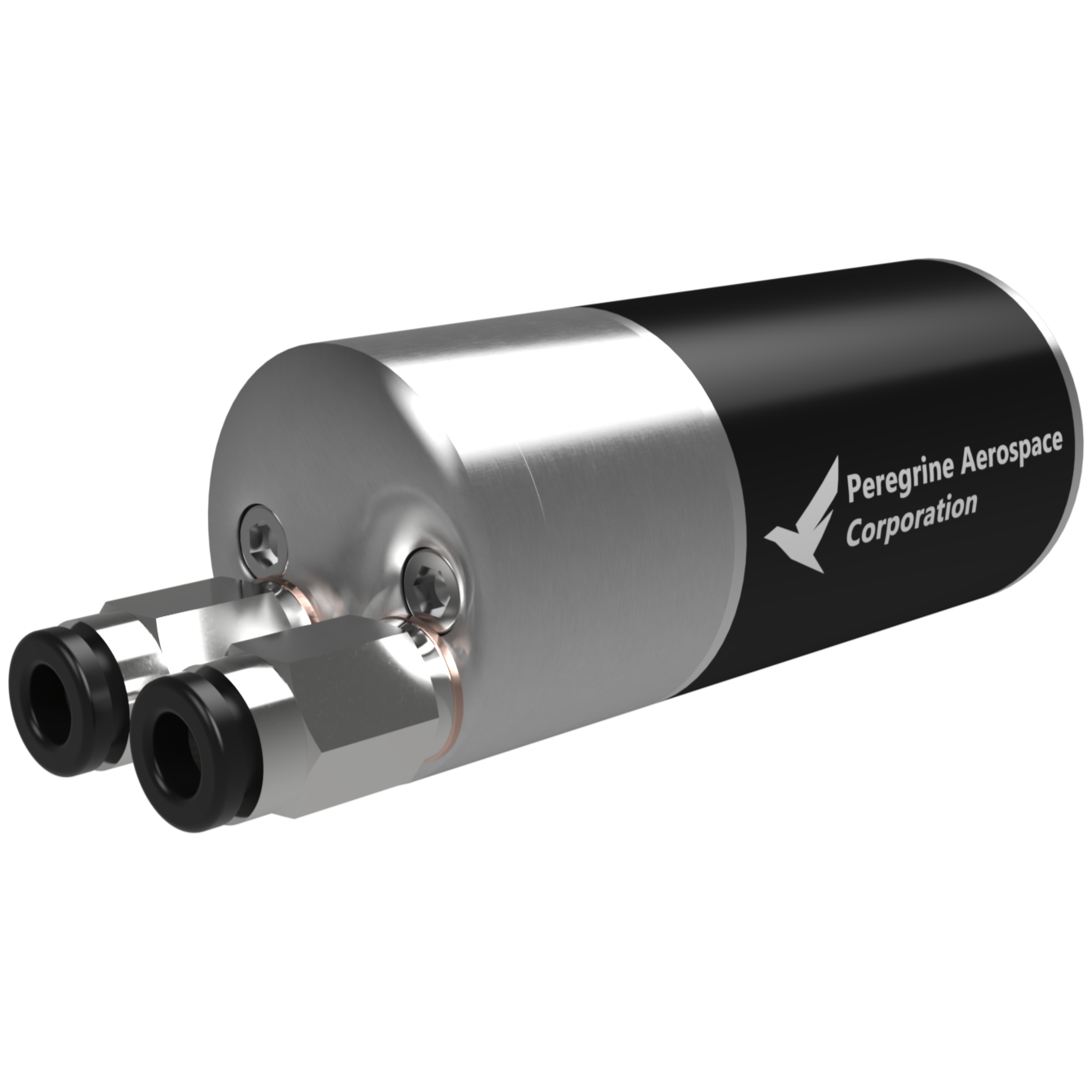
Why it Matters Now
The Department of Defense is increasingly prioritizing attritable, long-endurance unmanned systems to address rapidly evolving operational requirements. As missions expand from surveillance and logistics to strike and counter-UAS roles, propulsion systems are being pushed to deliver substantially more capability within increasingly constrained mass and volume envelopes. Weight, power, and range are in increasingly direct competition, and existing propulsion solutions are struggling to meet modern power-density requirements.
The same constraints are emerging across industrial and commercial UAV markets. Operators in agriculture, infrastructure inspection, and logistics are demanding higher power systems to support heavier payloads and expanded mission profiles, but cannot afford to compromise on endurance.
In both defense and commercial contexts, propulsion has become a bottleneck on platform capability, creating an immediate need for new, purpose-built propulsion architectures.
Conventional propulsion options force difficult tradeoffs. Reciprocating engines offer good endurance but are heavy, mechanically complex, and scale poorly in power density. Battery-electric systems provide high instantaneous power output, but suffer from low energy density, fixed mass as energy is depleted, and long recharge times, limiting endurance, payload, and operational flexibility.
Microturbine based systems combine the strengths of both approaches. By pairing a high-power electrical architecture with the energy density of liquid fuel, microturbines enable sustained power delivery at significantly lower system mass than reciprocating alternatives. The result is a scalable propulsion architecture capable of supporting high-power missions without compromising endurance, and is ready to meet the evolving demands of both defense and commercial unmanned platforms.
Strategic Market Focus:
Targeting High Value Gaps
Small-scale aerospace platform developers and emerging microturbine manufacturers remain underserved by traditional suppliers, particularly at the intersection of propulsion hardware and control systems.
Modern unmanned platforms increasingly require:
Turbine-based power at scales not well supported by legacy manufacturers
Engine control systems that integrate cleanly across a widening range of mission profiles and operating environments
Configurability without extensive NRE
Tightly integrated propulsion subsystems that can be iterated, validated, and deployed on compressed timelines
At the same time, many new entrants to the microturbine market lack the resources to divert significant R&D effort toward developing non-differentiating infrastructure such as fuel systems and digital engine controls.
Peregrine addresses this gap by providing propulsion infrastructure and critical subsystems that enables platform developers and engine manufacturers to commercialize more efficiently.
This strategy positions Peregrine as an enabling supplier to advanced aerospace programs while allowing the company to develop its own powerplant solutions around proven, familiar hardware architectures. In doing so, Peregrine is able to grow in a capital-efficient manner while simultaneously de-risking future integrated propulsion programs.
What Makes us Different
-
We don't just bolt existing parts together. We design controls, fuel systems, and other critical components as a cohesive architecture, which eliminates integration headaches downstream.
-
Our engineers have experience both developing microturbine engines as well as integrating existing propulsion systems into aerospace platforms. This perspective gives us a practical understanding of what it takes to move propulsion systems out of the lab and into real-world operation, enabling us to design our products in a way that makes that transition achievable for our customers as well.
-
We design for production from day one: scalable supply chains, cost-effective manufacturing, and components that can be sourced reliably.
-
Peregrine approaches every engagement with a focus on operational outcomes. Customers are not simply purchasing a product; they are adopting a solution intended to solve an integration or performance challenge.
We recognize that these systems do not exist in isolation. As part of our commercial engagements, we support customers through integration, validation, and early operation to ensure that our products perform as intended within their application. This outcome-driven approach helps customers realize value quickly while building the technical confidence needed for long-term deployment.
-
Peregrine Aerospace is a U.S. based company that develops our hardware and software domestically. Our engineering, integration, and testing are all conducted in the United States, and we prioritize maintaining a robust domestic supply chain.
Across much of the microturbine ecosystem, critical components are sourced from overseas vendors with limited transparency and support. This creates challenges for platform developers who require traceability, technical accountability, and alignment with U.S. regulatory and operational requirements.
By maintaining domestic development and supplier relationships, Peregrine offers products with clear provenance and continuity of support. In some areas, this positions the company among a very small number of U.S. based providers, and in some cases the only domestic option, for essential microturbine components.